Neck pain has become one of the most common complaints in modern lifestyles, especially with the rise of smartphones, laptops, and long hours spent in front of screens. Many people do not realize that this type of discomfort often develops gradually rather than suddenly. It starts as mild stiffness, then becomes a daily inconvenience, and eventually turns into persistent pain that affects focus, sleep, and productivity.
This condition is commonly referred to as tech neck relief related discomfort, although the issue itself is not caused by technology alone. Instead, it is the way the body adapts to prolonged poor posture while using digital devices.
What makes this condition challenging is that people often ignore early symptoms. By the time pain becomes noticeable, the muscles, joints, and soft tissues in the neck have already adapted to inefficient movement patterns.
This guide explains how tech neck develops, what is actually happening in the body, and how physiotherapy approaches such as those used at MyPro PHYSIO help in long term recovery and prevention.

Understanding What Tech Neck Really Is
Tech neck is not a medical diagnosis but a descriptive term used to explain neck strain caused by prolonged forward head posture.
When the head moves forward even slightly from its natural alignment, the pressure on the cervical spine increases significantly. The neck is designed to support the weight of the head in a balanced position, but modern habits often disrupt this alignment.
Over time, this forward posture forces the muscles in the neck and shoulders to work harder than normal. Some muscles become overactive and tight, while others weaken due to underuse.
This imbalance leads to discomfort and reduced efficiency in movement.
Common contributors include:
- Long hours of smartphone use
- Working on laptops without proper ergonomic setup
- Poor sitting posture during study or office work
- Lack of movement breaks throughout the day
- Habitual slouching in chairs or beds
Even though these actions seem harmless individually, the cumulative effect creates continuous stress on the cervical spine.
How Tech Neck Develops Over Time
The development of tech neck is gradual and often unnoticed in the beginning stages.
Initially, the body tries to compensate for poor posture by activating additional muscle support. This helps maintain head position temporarily but creates muscle fatigue over time.
As the condition progresses, the muscles in the neck and upper back begin to adapt to this stressed position. Fascia, which is the connective tissue surrounding muscles, also becomes tight and less flexible.
This leads to a cycle of tension that becomes harder to break without proper intervention.
Typical progression includes:
- Mild stiffness after long screen use
- Occasional shoulder tightness or fatigue
- Reduced ability to maintain upright posture
- Frequent neck discomfort during daily tasks
- Headaches or upper back tension in more advanced cases
At this stage, many people rely on temporary solutions such as rest or pain relief, but these do not address the root cause.
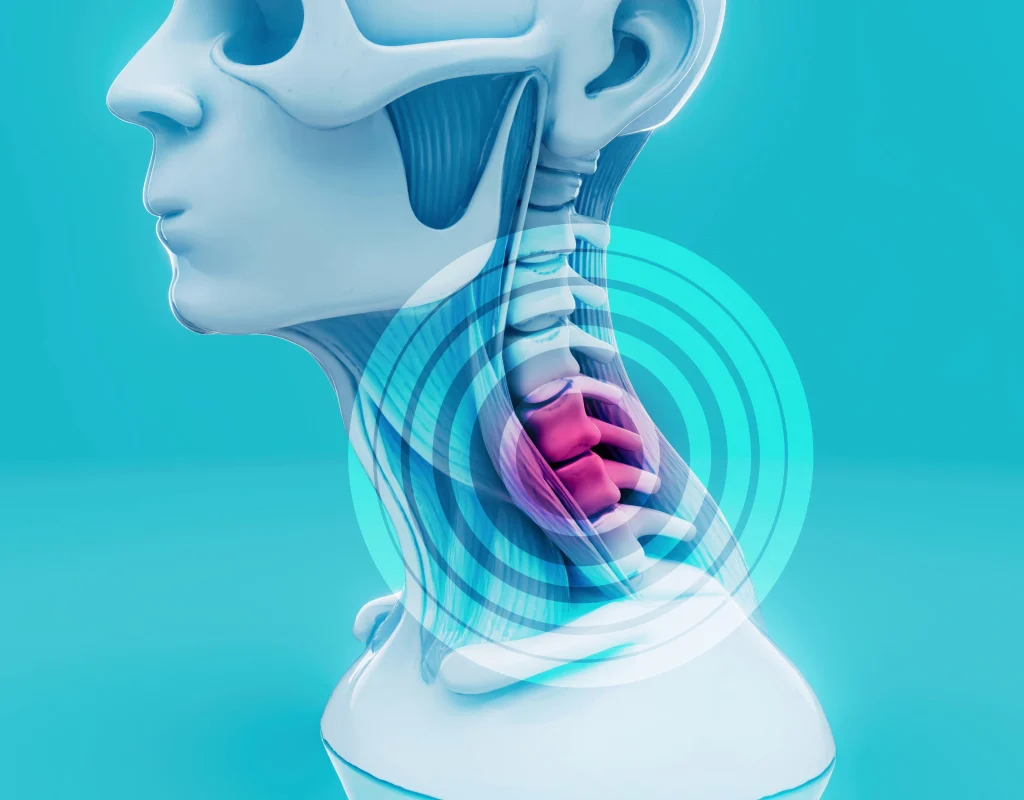
What Happens Inside the Neck During Tech Strain
To understand recovery, it is important to understand what is happening inside the body.
The cervical spine consists of bones, joints, muscles, ligaments, and nerves working together to support movement and stability.
When forward head posture is maintained for long periods, the following changes occur:
- Muscle fibers become shortened and tight
- Deep stabilising muscles become underactive
- Joint movement becomes restricted
- Fascia loses elasticity and becomes sticky
- Nerve sensitivity may increase in some cases
This combination creates both mechanical and functional imbalance in the neck.
That is why simple stretching alone often does not fully resolve the problem.
What Tech Neck Relief Actually Involves
Tech neck relief is not just about reducing pain temporarily. It is about restoring normal function and correcting the underlying movement patterns that caused the issue.
Effective recovery usually involves a combination of manual therapy, exercise, and lifestyle correction.
Physiotherapy focuses on three key areas:
Reducing tension in overworked muscles
Restoring joint mobility and flexibility
Rebuilding strength in weak stabilising muscles
When these elements are combined, the neck begins to function in a more balanced and efficient way.
Early Symptoms That Should Not Be Ignored
One of the biggest challenges with tech neck is that early symptoms are often mild and easily ignored.
However, the body usually provides warning signs before pain becomes persistent.
These may include:
- Stiffness after prolonged device use
- Feeling of heaviness in the neck or shoulders
- Difficulty maintaining upright posture for long periods
- Mild tension headaches
- Reduced neck flexibility when turning or tilting
At this stage, early intervention can significantly improve recovery outcomes and prevent long term issues.
How Physiotherapy Helps with Tech Neck Recovery
Physiotherapy plays a central role in managing tech neck because it addresses both symptoms and root causes.
Initial treatment often focuses on reducing muscle tightness and improving comfort. This helps the patient move more freely and reduces protective muscle guarding.
As symptoms improve, the focus shifts toward rehabilitation and correction.
This phase may include:
- Manual therapy to release tight muscles
- Joint mobilization to improve movement
- Postural correction training
- Strengthening exercises for deep neck muscles
- Upper back stability training
Each stage is introduced gradually based on patient tolerance and progress.
This structured approach is what makes physiotherapy more effective than temporary relief methods.
Role of Exercise in Long Term Recovery
Exercise is one of the most important components of long term recovery because it helps retrain the muscles to maintain proper alignment.
Without strengthening, the neck may easily return to old movement patterns that caused the problem.
Rehabilitation exercises usually focus on:
- Deep neck muscle activation
- Shoulder blade stabilization
- Upper back strengthening
- Postural endurance training
These exercises are not intense but are performed consistently over time to build long lasting support.

At MyPro PHYSIO, exercises are customised based on individual posture and severity to ensure safe progression.
How Daily Habits Affect Recovery
Even with proper treatment, daily habits play a major role in how quickly recovery happens.
Many cases of recurring neck pain are linked to repeated strain during everyday activities.
Common habits that affect recovery include:
- Looking down at phones for long periods
- Poor desk ergonomics
- Sitting without back or neck support
- Long uninterrupted screen time
Improving these habits is essential for long term success.
Simple changes such as adjusting screen height or taking movement breaks can significantly reduce strain.
When Improvement Usually Starts to Show
Recovery timelines vary depending on severity and consistency of treatment.
Most people begin noticing improvement within a few weeks of consistent therapy.
Positive changes often include:
- Reduced stiffness during daily activities
- Easier neck movement
- Less shoulder tension
- Improved posture awareness
- Better comfort during work or study
However, improvement does not mean full recovery. It indicates that the body is responding positively to treatment.
Why Long Term Prevention Matters
One of the most important aspects of recovery is preventing recurrence.
Even after symptoms improve, the underlying risk factors may still exist if habits are not corrected.
Long term prevention includes:
- Maintaining good posture during screen use
- Regular movement breaks throughout the day
- Continuing strengthening exercises
- Staying aware of neck and shoulder positioning
Prevention is what ensures that recovery is lasting rather than temporary.
How MyPro PHYSIO Supports Tech Neck Recovery
At MyPro PHYSIO, treatment is designed to go beyond short term symptom relief.
Each patient undergoes a detailed assessment to identify posture habits, muscle imbalances, and movement restrictions.
Based on this assessment, a personalised plan is created that combines manual therapy, exercise rehabilitation, and lifestyle correction.
The goal is not only to reduce pain but to restore long term neck function and prevent recurrence.
This structured approach ensures more stable and sustainable recovery outcomes.
Final Thoughts on Tech Neck Relief
Neck pain caused by modern device usage is becoming increasingly common, but it is also highly manageable when addressed properly