If you are currently dealing with back pain or have been diagnosed with a slipped disc, one of the most common questions you might be asking is this: what is the best exercise for slip disc?
This question usually comes from a place of uncertainty. Movement suddenly feels risky. You may feel that bending, walking, or stretching could make your condition worse. At the same time, complete rest does not seem to help either, because stiffness and discomfort often increase when you stay still for too long.
This creates confusion. Should you rest? Should you move? Or should you avoid exercise completely?
The reality is more balanced than most people think. Recovery from a slipped disc is not about avoiding movement entirely. Instead, it is about choosing the right type of movement, at the right intensity, and at the right stage of healing.
Exercise plays an important role in recovery when it is done correctly. It improves blood circulation, reduces stiffness, strengthens supporting muscles, and helps the spine recover more efficiently. However, incorrect exercise or poor technique can increase irritation and slow down healing.
This is why understanding safe movement is essential before starting any recovery routine.
If you want a broader understanding of treatment options, you can also refer to our guide on slipped disc treatment Malaysia for more detailed information.
Understanding Why Exercise Matters in Slip Disc Recovery
To understand why exercise is important, we first need to understand what happens in the body when a slipped disc occurs and what is the best exercise for slip disc.
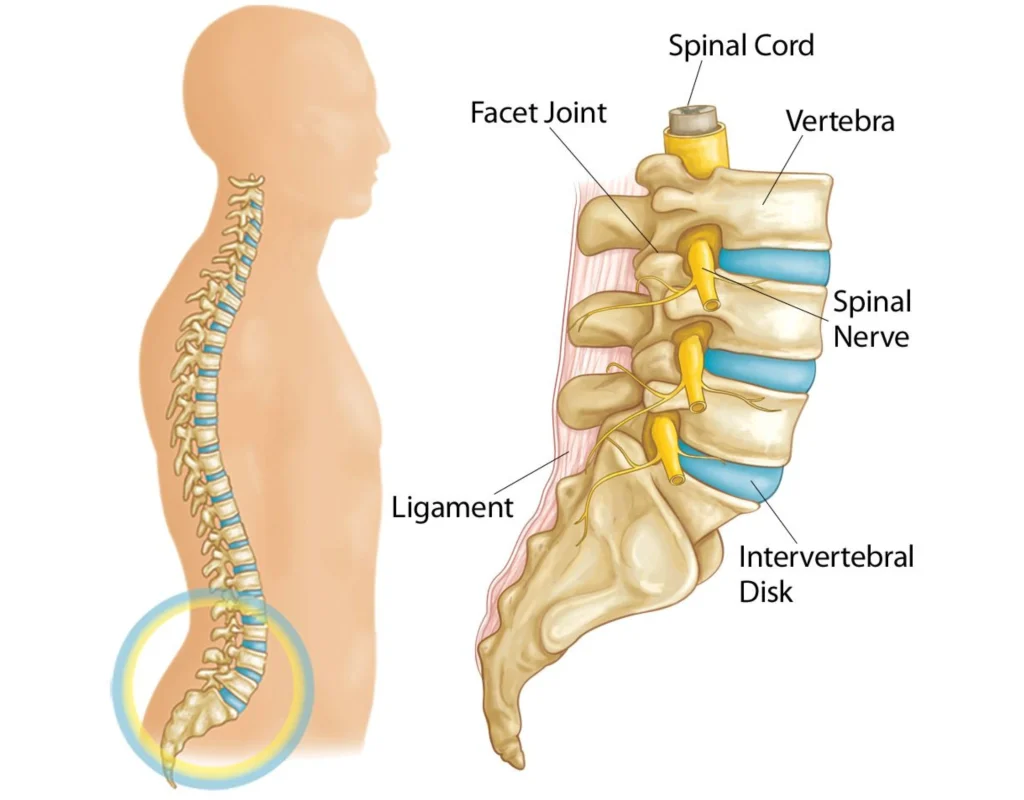
Between each bone in your spine, there is a soft cushion called an intervertebral disc. This disc acts like a shock absorber. When it becomes damaged or moves out of place, it can press on nearby nerves. This may cause pain, numbness, tingling, or weakness.
When this happens, the body reacts in a protective way. Muscles surrounding the spine tighten up to prevent further movement. While this is a natural response, it often leads to increased stiffness and reduced mobility.
This is where exercise becomes important.
Proper movement helps the body by:
- Improving blood circulation around the injured area
- Reducing muscle tightness and stiffness
- Supporting the healing process through gentle motion
- Strengthening deep core muscles that stabilise the spine
- Reducing pressure on spinal discs and nerves
- Preventing long-term weakness and deconditioning
Without movement, the body becomes more rigid. This can actually slow recovery and make pain last longer.
However, it is important to remember that not all movement is beneficial. The key is controlled and progressive exercise.
So, What Is the Best Exercise for Slip Disc?
There is no single exercise that works for every person. The best approach is a combination of safe, low-impact movements that support healing without placing excessive stress on the spine.
Below are some of the most commonly recommended exercises used in physiotherapy-based recovery programs.
1. Walking (Foundation of Recovery)
Walking is one of the safest and most effective exercises during slip disc recovery.
Although it seems simple, it plays a very important role in healing.
Why walking is important:
- Keeps the spine gently mobile without strain
- Improves blood flow and nutrient delivery to the disc
- Reduces stiffness in the lower back muscles
- Encourages natural posture and movement patterns
- Helps maintain general fitness during recovery
How to do it properly:
- Start with short walks of 5 to 10 minutes
- Walk on flat, even surfaces
- Maintain a relaxed and upright posture
- Avoid rushing or taking long strides
- Gradually increase duration based on comfort
Walking is often recommended even during early recovery because it is low risk but highly beneficial.
2. Pelvic Tilts (Core Activation and Control)
Pelvic tilts are gentle exercises that help activate deep core muscles that support the spine.
Benefits:
- Strengthens lower back support muscles
- Improves spinal stability
- Reduces stiffness in the lumbar region
- Helps retrain proper movement control
How to perform:
- Lie on your back with knees bent
- Keep feet flat on the floor
- Gently tilt your pelvis upward
- Hold for a few seconds
- Return slowly to the starting position
- Repeat in a controlled rhythm
This is often one of the first exercises introduced in physiotherapy sessions.
3. Knee-to-Chest Stretch (Gentle Release Movement)
This exercise helps reduce tension in the lower back.
Benefits:
- Reduces muscle tightness
- Improves flexibility in the lower spine
- Helps relieve mild nerve pressure
- Encourages relaxation of back muscles
How to do it:
- Lie on your back
- Slowly bring one knee toward your chest
- Hold gently for a few seconds
- Switch to the other leg
- Repeat without forcing movement
It should feel comfortable, not painful.
4. Cat-Cow Stretch (Spinal Mobility Exercise)
This is a gentle movement used to improve spinal flexibility.
Benefits:
- Encourages natural spinal motion
- Reduces stiffness and tightness
- Improves coordination between movement and breathing
- Helps restore confidence in movement
How to perform:
- Start on hands and knees
- Slowly arch your back upward
- Then gently lower your back downward
- Move in a slow and controlled rhythm
- Avoid fast or forceful movement
This exercise is commonly used in early rehabilitation stages.
5. Bird-Dog Exercise (Stability and Balance Training)
This exercise focuses on core strength and spinal stability.
Benefits:
- Strengthens core and back muscles
- Improves balance and coordination
- Supports spinal alignment
- Helps prevent future injury
How to do it:
- Start on hands and knees
- Extend one arm forward and opposite leg backward
- Hold position briefly
- Return to starting position
- Switch sides
Control is more important than speed in this exercise.
Exercises You Should Avoid
While exercise is important, some movements can worsen symptoms if done too early or incorrectly.
Avoid:
- Heavy weight lifting
- Sudden twisting movements
- Deep forward bending
- High-impact running or jumping
- Intense gym workouts in early recovery
These movements can increase pressure on the disc and irritate the nerves.
When Should You Start Exercising?
Timing is very important in slip disc recovery.
A general guideline includes:
- Acute pain stage: gentle movement only, mainly walking
- Early recovery stage: light stretching and mobility exercises
- Later stage: strengthening and stability training
Starting too early or progressing too quickly can delay healing instead of improving it.
Common Mistakes During Recovery
Many people unintentionally slow down their recovery.
Common mistakes include:
- Staying in bed for long periods
- Doing too much exercise too soon
- Copying random online workouts
- Ignoring pain signals
- Sitting for long hours without breaks
- Not being consistent with rehabilitation
Recovery is not about intensity. It is about consistency and control.
Why Physiotherapy Is Important
Although home exercises can help, physiotherapy provides structured guidance that improves outcomes significantly.
Physiotherapy helps by:
- Identifying safe and unsafe movements
- Designing personalised exercise plans
- Reducing pain more effectively
- Improving posture and movement patterns
- Preventing re-injury
- Guiding recovery progression safely
This is why many patients recover faster and more safely under professional care.
Long-Term Role of Exercise
Exercise is not only for short-term recovery. It plays an important role in long-term spinal health.
Regular movement helps to:
- Strengthen spinal support muscles
- Improve posture habits
- Reduce risk of recurrence
- Maintain flexibility and mobility
- Support overall physical health
This is why exercise becomes a long-term lifestyle habit after recovery.
When You Should Be Careful
Stop or adjust exercise if you experience:
- Increased or sharp pain during movement
- Worsening numbness or tingling
- Weakness in the legs
- Loss of balance or coordination
- Pain that does not settle after rest
These signs may indicate the need for professional reassessment.
Final Thoughts
So, what is the best exercise for slip disc?
The answer is not a single movement, but a combination of safe, controlled exercises such as walking, gentle stretching, and core stability training.
The most important factor is not intensity, but consistency and correct technique.
When done properly, exercise can significantly reduce pain, improve mobility, and support long-term recovery. But when done incorrectly, it can slow healing or worsen symptoms.
If you are unsure where to begin, professional guidance is always the safest option.
For personalised physiotherapy care and structured recovery programs, you can visit MyPro PHYSIO, where treatment plans are tailored to your condition and recovery stage.
Disclaimer
This article is for educational purposes only. Recovery and exercise suitability vary between individuals. Always consult a qualified healthcare professional before starting any exercise program.