When people hear the term physiotherapy, they often think of general exercises or basic pain relief. However, there is a more structured and medical approach known as clinical physiotherapy, which takes place in a controlled healthcare environment. This type of care is more detailed, systematic, and often used for patients with moderate to complex conditions.
Unlike general wellness or basic rehabilitation, this approach is based on assessment, diagnosis, and evidence-based treatment planning. It is delivered in a professional setting where every step is guided by clinical reasoning rather than general exercise advice.
Understanding how this process works helps patients know what to expect and why structured rehabilitation is important for long-term recovery.
What Clinical Physiotherapy Actually Means
Clinical physiotherapy refers to treatment delivered in a formal healthcare setting such as a clinic or rehabilitation centre. It is designed to assess, treat, and manage physical conditions using medical-based knowledge and structured protocols.
This approach is not random or generalised. Every treatment plan is based on a detailed assessment of the patient’s condition, movement ability, and functional limitations. The physiotherapist uses clinical reasoning to decide the most appropriate interventions.
The goal is to restore movement, reduce pain, and improve physical function in a safe and controlled way.
What Happens During the First Clinical Assessment

The first session in clinical physiotherapy focuses on understanding the patient’s condition in detail. This assessment phase is critical because it determines the entire treatment direction.
The physiotherapist begins by asking about symptoms, medical history, lifestyle, and daily activity levels. This helps build a complete picture of the underlying issue.
After that, physical testing is performed. This may include movement analysis, strength testing, posture evaluation, and functional assessment. The goal is to identify restrictions and movement patterns contributing to the problem.
Why Assessment Is the Foundation of Treatment
Treatment does not begin immediately without proper understanding of the root cause. Assessment is essential because similar symptoms can have different underlying reasons.
For example, lower back pain may be caused by muscle weakness in one patient, while another may have joint stiffness or nerve involvement. Without proper evaluation, treatment may not be effective.
This is why structured rehabilitation always begins with a detailed clinical evaluation before intervention starts.
How Treatment Plans Are Designed in Clinical Settings
After assessment, a personalised treatment plan is created. This plan is tailored based on the patient’s condition, goals, and physical capacity.
Treatment is usually structured in phases. Early stages focus on pain reduction and movement restoration, while later stages focus on strength and functional recovery.
A typical plan may include:
- Manual therapy techniques
- Targeted exercise programs
- Postural correction strategies
- Functional movement training
- Patient education and advice
Each element is selected based on clinical findings, ensuring treatment is precise and effective.
Hands-On Treatment and Manual Therapy
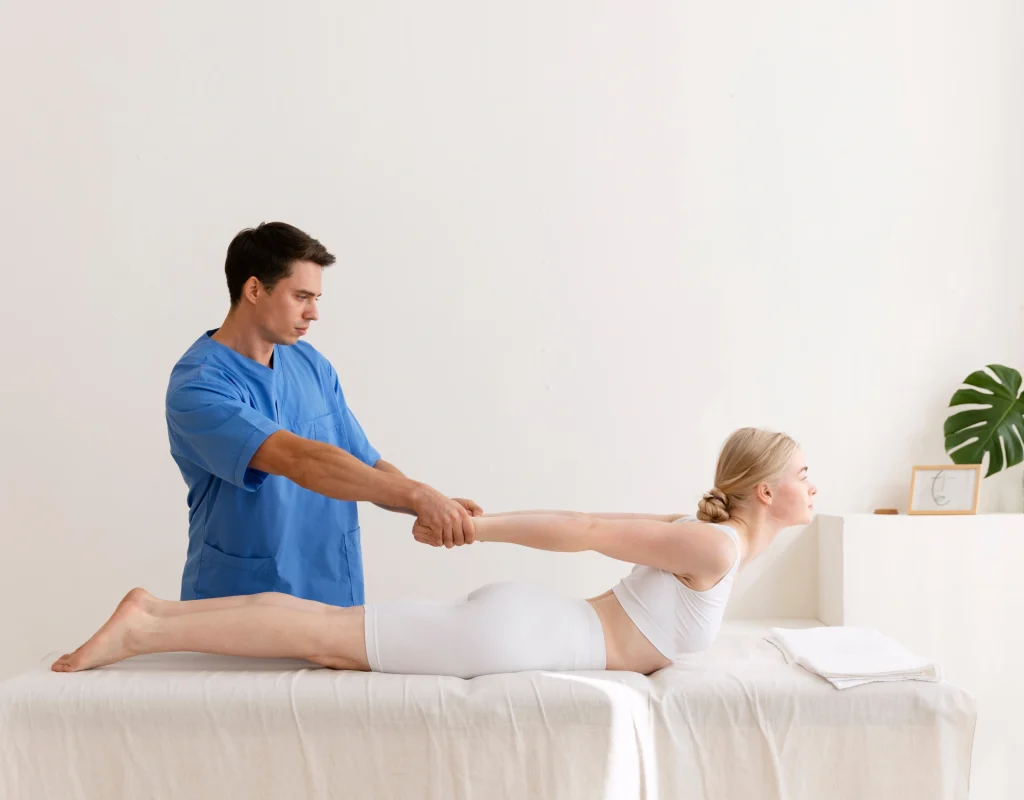
One of the key features of clinical physiotherapy is hands-on treatment. These techniques are used to improve joint movement, reduce muscle tension, and relieve pain.
Manual therapy may include joint mobilisation, soft tissue work, and guided movement assistance. These methods are performed by trained professionals in a controlled environment.
The purpose is not only symptom relief but also improving overall movement quality and long-term function.
The Role of Exercise in Clinical Physiotherapy
Exercise is a core component of rehabilitation, but it is not general exercise. Every movement is prescribed based on assessment findings and patient needs.
Exercises are designed to restore strength, flexibility, balance, and coordination. They are gradually progressed to ensure safe recovery.
Common categories include:
- Mobility exercises to restore joint movement
- Strength training for weak muscle groups
- Balance and stability training
- Functional movement exercises for daily activities
Each program is carefully monitored and adjusted based on progress.
Why Clinical Supervision Matters in Recovery
Supervision is one of the most important advantages of structured rehabilitation. Patients are guided by trained professionals who ensure exercises are performed correctly and safely.
Without supervision, incorrect movement patterns can slow recovery or worsen symptoms. Real-time correction helps prevent this.
This level of guidance is essential in ensuring treatment remains safe, effective, and goal-oriented.
Conditions Commonly Treated
This type of rehabilitation is used for a wide range of musculoskeletal and neurological conditions. It is especially important for cases requiring structured monitoring and progression.
Common conditions include:
- Neck and back pain
- Joint injuries and sprains
- Post-surgical rehabilitation
- Stroke recovery
- Sports injuries
- Chronic pain conditions
Each condition requires a tailored clinical approach for effective recovery.
How Progress Is Monitored Over Time
Recovery is continuously tracked through regular reassessment. Improvements in pain, strength, movement, and function are monitored closely.
If progress is slow, the treatment plan is adjusted accordingly. This ensures recovery always stays on the right path.
Ongoing monitoring is a key part of structured rehabilitation and helps improve long-term outcomes.
Why Education Is Part of Recovery
Patient education plays an important role in long-term recovery. Patients are taught about their condition, contributing factors, and how to manage symptoms effectively.
This includes advice on posture, movement habits, workplace ergonomics, and lifestyle adjustments. Understanding the condition helps patients take an active role in recovery.
Clinical Approach vs General Exercise
General exercise programs are often self-directed and not based on medical assessment. In contrast, clinical physiotherapy is structured, assessed, and guided by a trained professional.
The key difference is personalisation. Treatment is designed specifically for the patient’s condition, not a general fitness goal.
Why It Is More Effective for Complex Conditions
For complex or long-term conditions, structured rehabilitation is essential. It provides a controlled environment where recovery can be safely managed.
Conditions such as post-surgical cases, neurological issues, and chronic pain require close monitoring. Without structured care, recovery may be incomplete or delayed.
Home-Based Support in Recovery
Although treatment takes place in a clinical setting, recovery continues at home. Patients are given exercises to support ongoing progress.
In some cases, home-based care is also used for patients with mobility limitations or transportation difficulties. This ensures continuity of care outside the clinic environment.
How MyPro PHYSIO Delivers Clinical Care
At MyPro PHYSIO, structured rehabilitation begins with detailed assessment and personalised planning. Each patient is evaluated to understand their condition and functional limitations.
From there, a tailored recovery program is developed focusing on safe progression, movement restoration, and long-term prevention.
The approach integrates structured rehabilitation principles to ensure consistent and effective recovery.
Final Thoughts
Clinical physiotherapy is a structured and evidence-based approach to rehabilitation. It focuses on assessment, diagnosis, and personalised treatment planning rather than general exercise.
It ensures recovery is safe, progressive, and tailored to each individual’s needs. With proper guidance, patients can achieve meaningful improvements in movement, pain, and quality of life.
CTA
If you are dealing with pain, injury, or movement issues, structured care can make a significant difference in recovery.
Visit MyPro PHYSIO to learn more about rehabilitation options and receive a personalised clinical physiotherapy plan designed for safe and effective recovery.